Quiet, Tough, or Simple? Choosing a Belt, Chain, or Screw-Drive Opener in West Kelowna
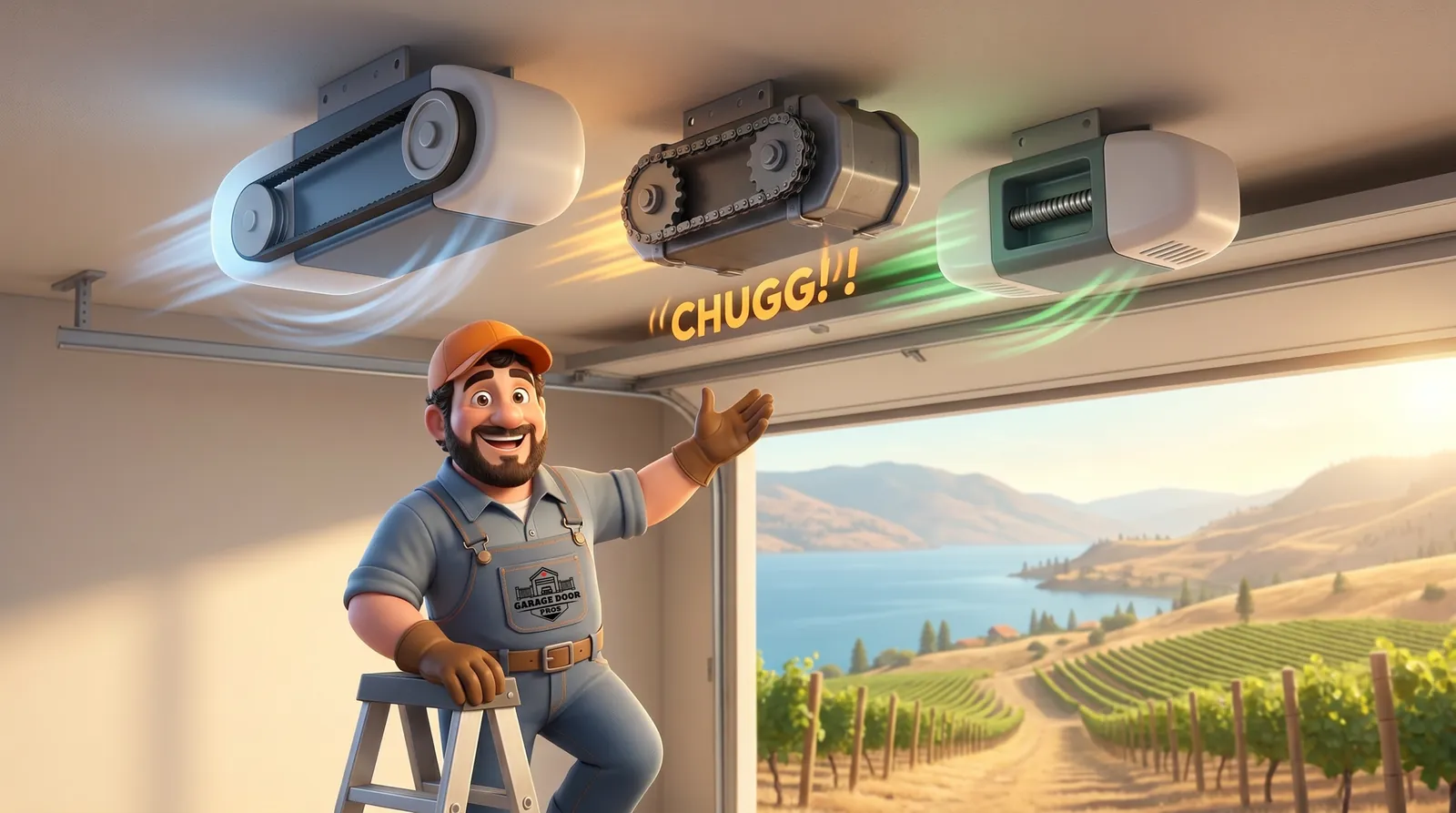
Garages around West Kelowna do a lot of double duty. The space below the primary bedroom in an attached lake home is also where the kayaks live, where the SUV gets loaded for a Big White weekend, and where the door has to ride out a wildfire-season power cut without leaving you stranded. The opener you bolt to the ceiling shapes all of that, and the three common drive types, belt, chain, and screw, each lean toward a different priority. A few minutes spent matching one to your house pays off for the next decade.
Short answer first: pick a belt drive when the garage touches living space and quiet is the goal, a chain drive when it is a detached shop where a little rattle is fine, and a screw drive only if you do not mind the upkeep our dry Okanagan dust demands. The sections below explain why, and where Okanagan-specific features like battery backup and phone control change the math.
What sets the three drive types apart
Every opener pulls a trolley along a rail to lift and lower the door. The difference is what moves that trolley. A belt drive runs a reinforced rubber-and-fibreglass belt, similar to the serpentine belt under a car hood. A chain drive uses a steel chain much like an oversized bicycle chain. A screw drive spins a long threaded steel rod that drives the trolley directly along its thread.
Those mechanics ripple into everything you actually notice. The belt cushions vibration, the chain passes it straight through the structure, and the screw sits between them while using the fewest separate parts. None is simply better than the others; they are built for different trade-offs. The catch in our valley is that a screw drive’s signature feature, the bare threaded rod, is also a magnet for the fine dust that drifts through West Kelowna in the dry stretch of summer.
Power matters regardless of which mechanism you choose. A heavy insulated double or a solid wood door asks for more lifting force, and an underpowered motor on a hot afternoon runs at its limit and burns out early. When we fit a garage door opener, the first move is sizing the motor to the real weight of your door, because a correctly matched unit lasts far longer than one that strains on every cycle.
Noise, dust, and how your garage is built
For most West Kelowna homeowners, noise is the deciding factor, and it comes straight from the floor plan. When the garage shares a wall or ceiling with a bedroom or living room, a belt drive is the obvious choice. A chain drive is noticeably louder and sends a low rattle through the framing that you feel as much as hear, which is the last thing you want under a bedroom on a quiet lake morning. In a detached garage set back across the yard, that noise never reaches the house, so paying extra to silence it makes little sense.
Upkeep separates them just as clearly, and our climate sharpens the difference:
- Belt drives are sealed and ask for almost nothing beyond an annual once-over.
- Chain drives want periodic lubrication and a tension check to stay smooth and quiet.
- Screw drives have few parts to wear, but their exposed thread collects fine Okanagan dust and needs regular wiping and re-lubrication to keep from dragging.
That dust point is worth dwelling on. In a region where summers run dry and dusty, an open threaded rail gradually gums up, and a neglected screw drive starts to labour and grind. A self-lubricating rail slows the problem but does not erase it. Garage layout also steers the install: low headroom, overhead storage, and the path of the existing wiring all affect which unit fits cleanly. A wall-mount jackshaft opener that mounts beside the door is a worthwhile fourth option for high ceilings or a loft of storage above the door.
Belt vs chain vs screw, side by side
Lining the three up on the things that matter makes the trade-offs easy to read. Here is how they compare for a typical West Kelowna home.
| Opener type | Noise | Upkeep in our climate | Relative cost | Best suited to |
|---|---|---|---|---|
| Belt drive | Very quiet | Very low, sealed belt | Highest | Attached lake homes, bedrooms above |
| Chain drive | Loud | Moderate, lube and tension | Lowest | Detached garages and shops |
| Screw drive | Moderate | Higher, exposed thread holds dust | Mid-range | Owners who want few parts and accept the wiping |
A few rules of thumb fall out of that:
- Garage under a bedroom or beside a living space: choose belt.
- Detached shop on a budget: chain is the smart value.
- Loft storage or very high ceilings: ask about a wall-mount jackshaft.
- Dusty, low-traffic detached space and you do not mind upkeep: screw can fit.
Whichever drive you land on, professional setup is what keeps a heavy door safe over people and vehicles. A clean opener installation gets the safety sensors, force limits, and travel stops dialed in correctly so the door reverses when it should.
The Okanagan features that earn their keep
Drive type is only half the decision; the electronics bolted on top matter just as much here. Two features carry real weight in this valley. First, battery backup. Wildfire season brings real outages, and a DC opener with a backup battery will still cycle the door several times after the grid drops, so you are never wrestling a heavy door by hand while loading the car to leave. Second, Wi-Fi control. With a phone app you can confirm the door is shut and close it from the dock at the lake or the lift line at Big White, and get an alert the moment it is left open.
Rolling-code security rounds it out, swapping the access code every cycle so an old fixed-code remote cannot be copied. If your remote is the only thing showing its age, a straightforward remote replacement is often all you need rather than a whole new opener.
Picture a West Kelowna family in an attached home above the lake, the primary bedroom sitting right over a double garage. Their aging chain drive wakes the house every time someone heads out early for the water. Swapping to a belt drive with a soft-start motor drops the noise to a quiet hum, battery backup means the door still opens during a smoke-season outage, and the phone app lets them confirm it closed after they have already pulled away toward Big White for the weekend. That combination, quiet belt plus DC backup plus Wi-Fi, is the sweet spot for most attached Okanagan homes.
If you would like help matching the right opener to your door and your garage, we cover the choice, supply, and fitting. Reach out for opener service in West Kelowna and we will walk the options with you. , call (778) 910-3106, or
Frequently Asked Questions
Which opener is quietest for a lake home with a bedroom over the garage?
A belt drive runs the quietest of the three by a wide margin. The reinforced belt soaks up the vibration that a metal chain would otherwise send straight into the floor above. For West Kelowna homes with sleeping space over an attached garage, it is almost always the right pick.
Is a belt-drive opener worth the higher price in the Okanagan?
For an attached or under-bedroom garage, the quiet is usually worth it. A belt costs a bit more than a chain up front but needs little upkeep and keeps the household from waking on early lake mornings. For a detached shop where noise does not travel into living space, a chain drive saves money with no real downside.
Why do screw-drive openers struggle with Okanagan dust?
A screw drive moves the trolley along an exposed threaded rod, and that open thread collects the fine dust that drifts around West Kelowna in dry months. The grit thickens the lubricant and makes the unit drag, so it wants more regular wiping and re-lubrication than a sealed belt. A self-lubricating rail helps but does not remove the chore entirely.
Will a garage door opener keep working during a wildfire-season outage?
Only if it has battery backup, which is a feature of the opener rather than a drive type. A DC opener with a backup battery will cycle the door several times after the grid drops, so you are never stuck hauling a heavy door by hand while packing to leave. We strongly recommend it for any Okanagan home that loses power during fire season.
Can I check or close my garage door from the lake or Big White?
Yes, if you choose an opener with built-in Wi-Fi and a phone app. You can confirm the door is shut and close it remotely from the dock or the chairlift, and get an alert if it was left open. It is one of the more popular upgrades we install for getaway-minded West Kelowna owners.
How long does an opener last before it needs replacing?
Most quality openers run 10 to 15 years, and longer with light maintenance. The motor often outlives its accessories, so a tired backup battery, worn gears, or an old non-rolling-code remote are common reasons to upgrade before the motor itself quits. A failing remote alone can sometimes be solved with a simple replacement rather than a whole new unit.