From Wildfire Smoke to First Snow: Prepping Your Vernon Garage Door for Winter
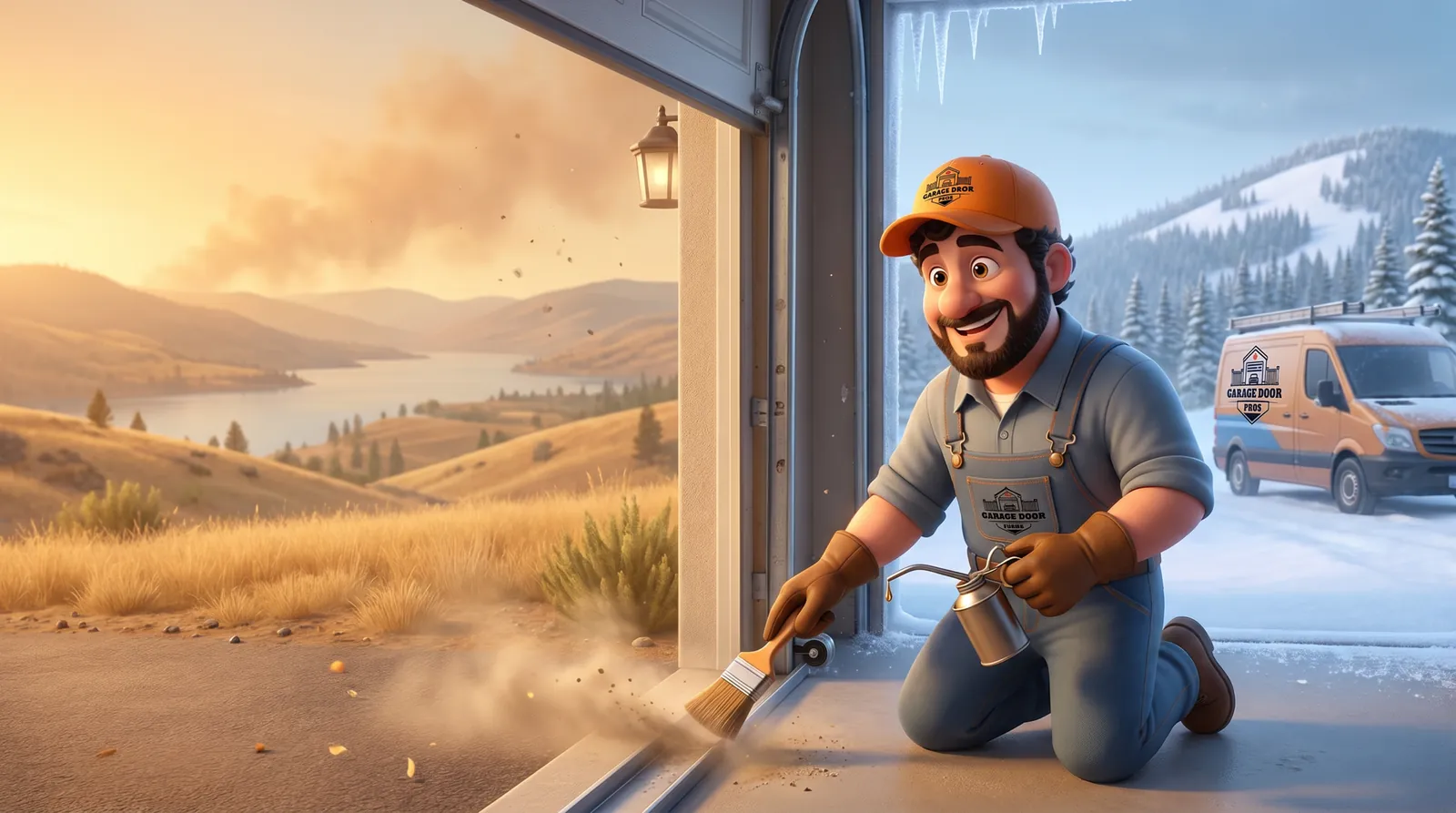
There is a strange in-between week in the North Okanagan every year. The wildfire haze finally lifts off Kalamalka and Okanagan Lake, the air smells like fall again, and the heat that hung over Vernon for two solid months breaks almost overnight. That window, usually somewhere in September, is the single best time of year to look at your garage door. Behind you is a long, dusty, smoky summer that has quietly worn the door down. Ahead is a real winter, the kind that piles snow on the driveway and drops well below freezing for weeks at a time.
The short answer: a Vernon garage door takes a beating from heat, dust, and wildfire ash all summer, and then has to survive a genuinely cold, snowy winter. An early-fall tune-up clears out the summer grit, restores the lubrication the heat baked away, replaces sun-damaged seals, and confirms the springs and balance are ready before the cold makes a weak part fail. Do it in September and you head into winter with a door that opens smoothly on the coldest mornings.
What a Smoky Okanagan Summer Does to Your Door
Vernon summers are hard on machinery in a way the milder, wetter parts of BC never see. We get long stretches of 33 to 36 degrees, almost no rain for weeks, and air thick with wildfire smoke and fine valley dust. All of that settles somewhere, and a lot of it settles into your garage door tracks and onto your rollers.
By the end of August, the grease that was protecting your hinges, rollers, and bearings has often dried out and baked off. What is left behind is worse than nothing: old lubricant mixed with ash and dust turns into a gritty paste that grinds at the metal every time the door moves. You can sometimes hear it, a dry rasp or squeal that was not there in spring. That is metal wearing on metal, and it accelerates fast once the cold arrives and stiffens everything.
This is why a fall reset matters more here than it does on the coast. The door has been collecting abrasive grit for months, and it is about to be asked to work in the worst conditions of the year. A thorough fall maintenance service flushes the season out of the system before winter loads it up.
The Fall Tune-Up: Clearing Summer, Bracing for Cold
The goal in September is twofold. First, undo the damage the summer did. Second, get the door ready for what Vernon winter actually throws at it, which is far colder than Kelowna or the south valley and a world away from the mild coast. Up here near Silver Star country, a garage that was fine in October can be facing weeks of deep cold by January.
Here is what a proper fall checkup covers:
- Flush the tracks and clean the rollers. Wipe a summer’s worth of valley dust and wildfire ash out of both vertical and horizontal tracks, and clean the rollers so grit is not driven back into the bearings.
- Re-lubricate everything that moves. Apply fresh lubricant to rollers, hinges, bearings, and the spring coils now that the heat-baked old grease is gone, so you are not running metal-on-metal into the cold.
- Inspect and replace weather seals. Check the bottom seal and side weatherstripping for UV cracking and hardening, and swap anything brittle before sub-zero air can pour underneath.
- Test spring tension and door balance. Disconnect the opener and lift the door by hand; a properly balanced door holds at waist height, while a door that drops or feels heavy is warning you about a tired spring.
- Check the opener’s force and reverse settings. Cold thickens the works and makes the door heavier to lift, so confirm the opener has the strength and safety reversal margin it needs for winter.
- Tighten the hardware. A summer of expansion, contraction, and daily cycling loosens bolts on hinges, brackets, and the track; snug them back down.
- Look at insulation and weatherproofing. Decide whether the door is sealing and holding heat well enough for the winter ahead, or whether it needs upgrading.
That list is exactly the work covered by our local garage door maintenance for Vernon homeowners, and it is built around this region’s seasons rather than a generic checklist.
Springs and Balance: Why Cold Is the Real Test
If there is one part of the door that picks the worst possible moment to fail, it is the spring. Torsion and extension springs are under enormous tension, and steel under tension gets more brittle as it gets colder. A spring that has been quietly weakening all summer will often hold together right up until the temperature drops, and then let go on a minus-fifteen Vernon morning when you are already late and the driveway needs shovelling.
That is why the fall is the time to test balance, not the dead of winter. Disconnect the opener and lift the door halfway by hand. If it stays put, the springs are doing their job. If it slams down or feels like it weighs a ton, the springs are losing tension and should be addressed now, while a technician can work on a warm, cooperative door rather than a frozen one. Spring work is high-tension and genuinely dangerous to attempt yourself, so a worrying balance check is a clear signal to book a spring and door repair visit before the cold settles in.
Sealing Out a Real Vernon Winter
The other half of fall prep is keeping the cold out. Vernon does not get coastal drizzle and a few frosty nights; it gets sustained, serious cold and real snow accumulation. A bottom seal that spent the summer under relentless UV is often cracked, flattened, or rock-hard by September, and a hardened seal cannot keep frigid air, blowing snow, and meltwater from creeping under the door all winter.
Replacing tired weatherstripping is a small job with a big payoff. It keeps the garage measurably warmer, protects anything you store out there, and stops cold from leaking into the rest of the house through an attached garage wall. While you are at it, fall is the right time to think about winterizing the door as a whole: fresh seals, cold-rated lubricant, and a tuned opener working together.
For garages you actually use in winter, whether that is a workshop, a gym, or just a place you would rather not see your breath, an insulated door is the bigger upgrade. Adding garage door insulation holds heat through the long cold stretches we get up here, takes load off the opener, and quiets the door considerably. Paired with new weatherstripping, it turns a leaky summer-worn door into one that is genuinely sealed against a North Okanagan winter.
A Quick Vernon Scenario
Picture a home up off Bella Vista, looking down over the valley. All summer the owner watched smoke roll in over the lake and parked in the garage twice a day without thinking about the door. By late August the door had started squealing on the way up, but it still worked, so it got ignored. Then the first real cold snap hit in early November, the door groaned halfway up and stuck, and the opener strained against a dry, grit-packed track until it gave up. What would have been a thirty-minute fall tune-up in September became an emergency call on a freezing morning. Catching it early is almost always cheaper, calmer, and warmer.
Get It Done Before the Cold Lands
The smoke-to-snow window is short in Vernon, so the time to act is now, while parts are warm and a technician can do the job without fighting frozen hardware. Clear out the summer, restore the lubrication, replace the worn seals, and confirm the springs are ready, and your door will open without complaint all the way through to spring.
Ready to get your door winter-ready? , call (778) 910-3106, or . We will have your Vernon garage door cleared of summer and braced for first snow.
Frequently Asked Questions
Why does my garage door need a tune-up at the end of a hot Vernon summer?
A long, dry summer bakes the old grease off your rollers and hinges while fine valley dust and wildfire ash pack into the tracks. That leaves metal grinding on metal right as the door is about to face sub-zero cold. An early-fall tune-up clears the grit, restores lubrication, and catches worn parts before the first hard freeze stiffens everything.
When is the best time to do fall garage door maintenance in Vernon?
Aim for September through mid-October, once the worst of the smoke and heat has passed but well before the first real cold snap. Vernon winters arrive earlier and harder than the south valley, so you want the work done while parts are still warm and flexible. Booking early also beats the rush when everyone calls after the first freeze.
Can wildfire smoke and ash actually damage a garage door?
The smoke itself does not, but the fine ash and dust that settle all summer absolutely build up. They grind into rollers, clog tracks, and turn old lubricant into an abrasive paste. Flushing that grit out and re-lubricating is the single most useful thing you can do for a door that has sat through an Okanagan smoke season.
Why do garage door springs fail in cold weather?
Cold makes steel more brittle and stiffens an already marginal spring, so the first hard Vernon freeze is when a worn spring finally snaps. A spring that lifted the door fine all summer can let go on a minus-fifteen morning. Checking tension and door balance in the fall is how you catch a tired spring before it strands you.
Do I need to replace my weather seals before winter?
If the bottom seal or side weatherstripping is cracked, hard, or flattened from a summer of UV and heat, yes, replace it before the cold lands. A degraded seal lets frigid air, snow, and drifting cold pour under the door all winter. Fresh seals keep the garage warmer, protect anything stored inside, and cut heat loss into the house.
Is it worth insulating my garage door for a Vernon winter?
For most Vernon homes, yes, especially with attached garages or heated workspaces. An insulated door holds heat far better through the long cold stretches we get up here near Silver Star, keeps the space usable, and reduces strain on the opener in the cold. It pairs well with fresh weatherstripping for a genuinely sealed, warmer garage.