Living by Osoyoos Lake? Protecting Your Garage Door From Humidity and Rust
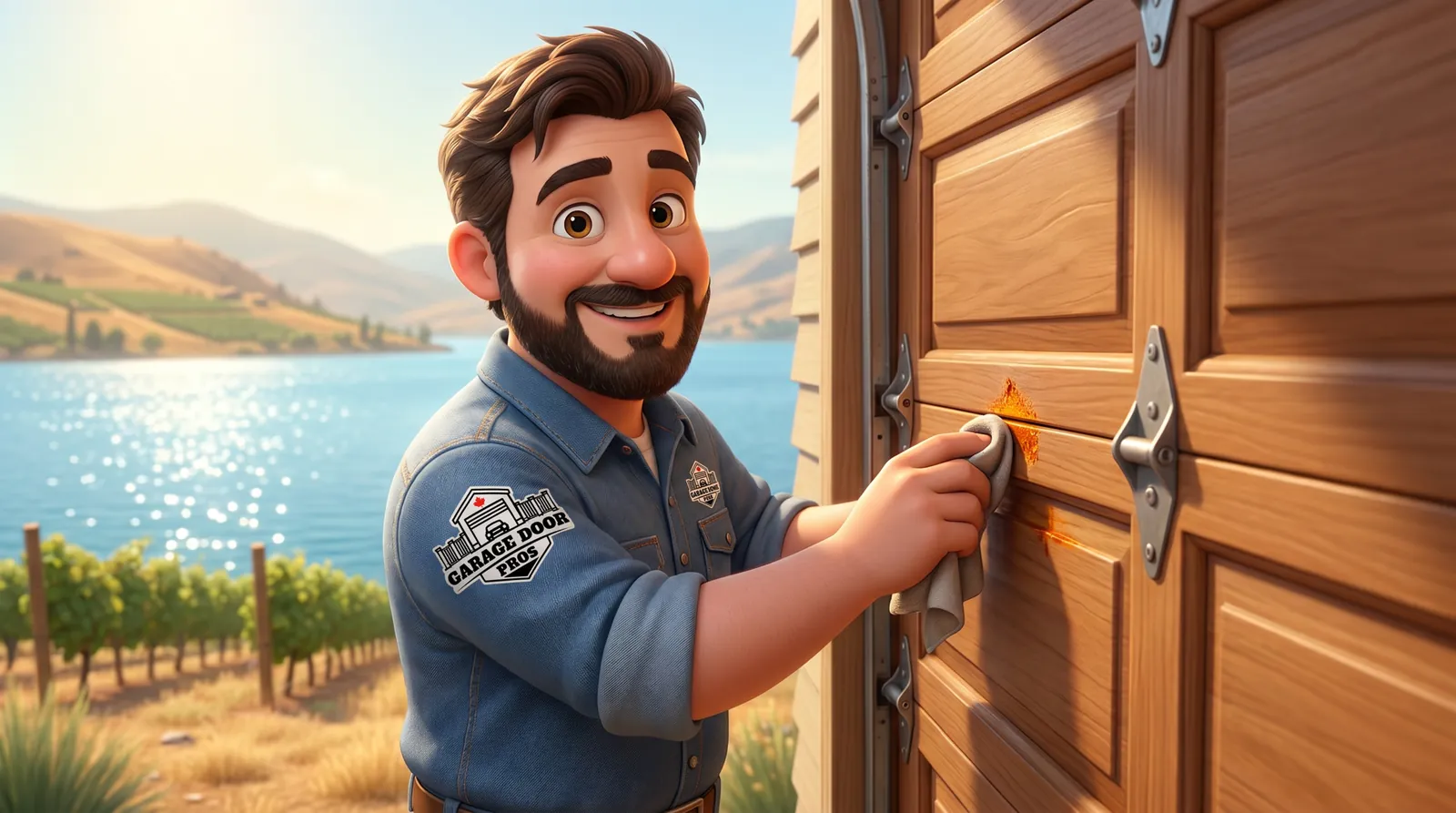
Life on Osoyoos Lake comes with a lot of perks, and one quiet downside that most homeowners never think about: the air near the water is harder on your garage door than the dry benchland just up the hill. That extra humidity settles on every metal part of the door and slowly goes to work, rusting cables, springs, rollers, and hardware in a way an inland home never deals with. The good news is that a little regular care, tuned for lakeside conditions, keeps the rust at bay and adds years to the door’s life. Here is how.
The short answer: clean and dry the door, lubricate the moving parts with a moisture-resistant product, keep an eye on the cables and springs for early rust, and specify rust-resistant hardware when you replace parts. Do that on a quarterly rhythm and the humidity stops being a problem. Let us walk through why the lake changes the rules and what to do about it.
Why living near the lake changes the rust equation
In most of the South Okanagan, the climate is hot and dry, and rust is a minor concern. Right next to a lake, though, the picture shifts. Water evaporating off Osoyoos Lake raises the humidity of the air around lakeside homes, and that moisture-laden air is in constant contact with your garage door. Even without rain, the door’s metal parts spend their days and nights in damper air than a property a few hundred metres inland.
That humidity is what drives corrosion. Moisture settles on the springs, cables, rollers, hinges, and fasteners, and over months and years it oxidizes the bare metal into rust. It tends to be worst on the parts that are exposed and unprotected, and on the lower sections of the door where moisture and any splashed water collect. The process is gradual, which is exactly why it gets ignored until a cable frays or a roller seizes.
So a lakeside door needs a different maintenance mindset than an inland one. The dry-climate advice you will find online, lubricate once a year and forget it, does not hold near the water. Treating humidity and rust as the main threats, and servicing more often because of them, is the heart of effective lakeside garage door maintenance. Get that right and the door lasts as long here as it would anywhere.
Where rust strikes first
Knowing where to look lets you catch corrosion early, while it is still a cleaning job rather than a replacement. A few parts are consistently the first to show it.
- Cables: the steel lifting cables on each side rust and fray, and a rusted cable can snap under tension.
- Springs: the torsion or extension springs above the door corrode and weaken, shortening their life.
- Rollers and bearings: moisture in a roller’s bearing rusts it, leading to grinding, flat spots, and seizing.
- Hinges and fasteners: nuts, bolts, brackets, and hinges rust and loosen, making the door noisy and loose.
- The bottom of the panels: where splashed water and condensation collect, especially on steel doors with scratched finishes.
The cables and springs deserve the most attention, because they are both the most likely to rust and the most dangerous when they fail. A frayed, rusty cable or a corroded spring is not a wait-and-see item. Caught early during a routine look, a rusting part is a simple swap; left until it lets go, it can drop the door, send it off its track, or cause injury. If you spot rust on a cable or spring, stop using the door and have it inspected, since those parts are under high tension and are firmly professional territory.
A lakeside maintenance routine
The routine itself is simple, and the difference is doing it more often than an inland home would. Set aside about twenty minutes each season, and work with the door closed and the opener unplugged when your hands are near the tracks.
- Wipe down the door, tracks, and visible hardware with a dry cloth to clear off moisture, dust, and any film.
- Inspect the cables, springs, rollers, and hardware closely for orange discolouration, flaking, or fraying.
- Lubricate the rollers, hinges, springs, and bearings with a garage-door silicone spray or white lithium grease, which leave a moisture-resistant barrier.
- Wipe the tracks clean (never grease them), so rollers run on a clean, dry surface.
- Check the bottom seal and weatherstripping, which keep splashed water and damp air out of the garage.
- Touch up any scratches or chips in a steel door’s finish, since bare metal is where rust starts.
That moisture-resistant lubricant is doing two jobs at once: it keeps the parts gliding, and it leaves a thin protective film against the humid air. Wipe off any excess so it does not collect dust, and pay extra attention after a humid stretch. Done quarterly, this routine keeps corrosion from ever getting a foothold, and it is the single best thing a lakeside homeowner can do for the door’s longevity.
Rust-resistant hardware and when to upgrade
Maintenance slows rust, but on a near-lake home it is also worth stacking the deck with hardware built to resist it. Galvanized springs, sealed nylon rollers, and moisture-rated cables and fasteners corrode far more slowly than standard parts in humid air, so they simply last longer where you live. You do not have to replace everything at once; the smart approach is to upgrade to rust-resistant components as parts wear out and need replacing anyway.
The natural moment for a bigger upgrade is when you are repairing or replacing a major component, or putting in a new door. When a repair calls for new cables, springs, or rollers, choosing the rust-resistant versions costs little extra and pays off in years of added life. And if you are speccing a new door for a lakeside property, a galvanized, moisture-rated build with a quality factory finish is the right call, the same way a new installation on the waterfront should be specced for the conditions rather than treated like an inland home.
Picture a homeowner right on Osoyoos Lake whose 12-year-old door has started squealing and shows orange streaks on the cables. Rather than wait for the cable to snap, they have it serviced, swap the rusting cables and rollers for galvanized and sealed parts, and move to a quarterly maintenance rhythm. The door goes from a corrosion problem waiting to happen to one that will run smoothly for years more. If your lakeside door is showing rust or you would like it set up to resist the humidity, for garage door maintenance in Osoyoos, call (778) 910-3106, or , and we will get it protected against the lake air for the long haul.
Frequently Asked Questions
Does living near Osoyoos Lake really cause garage door rust?
Yes. Air near the water carries more moisture than the dry benchland just up the hill, and that humidity settles on the metal parts of your garage door. Over time it corrodes cables, springs, rollers, and hardware faster than on an inland property. It is a slow process, but on a lakeside home it is the main thing shortening a door's life.
What lubricant should I use on a garage door near the lake?
Use a garage-door silicone spray or white lithium grease, both of which cling to metal and resist moisture. They do double duty by lubricating the moving parts and leaving a thin barrier against the humid air. Avoid thin oils that wash or wick off quickly, and never use WD-40 as a lubricant, since it is a degreaser that strips protection away.
Is galvanized or rust-resistant hardware worth it on a lakeside garage door?
On a lakefront or near-lake home, yes. Galvanized springs, sealed nylon rollers, and moisture-rated cables and hardware resist corrosion far better than standard parts, so they last longer in the humid air. When you replace worn components or install a new door near the water, specifying rust-resistant hardware is money well spent.
How often should I service a garage door near Osoyoos Lake?
Aim for a check every three to four months, more often than the once-a-year advice written for drier inland homes. Lakeside humidity works on the metal year-round, so quarterly cleaning, lubrication, and a rust inspection keep small corrosion from becoming a cable or spring failure. Tie it to the change of seasons so it is easy to remember.
What are the signs of a rusting garage door cable?
Look for orange discolouration, rough or flaking strands, and any fraying along the cables on each side of the door. A rusting cable weakens and can snap, which is dangerous and can drop or twist the door. If you see rust on a cable, stop using the door and have it inspected, since cables are under high tension and are not a DIY repair.
Can I stop garage door rust myself, or do I need a professional?
Cleaning, drying, and lubricating the door to slow rust is great homeowner upkeep. Where a professional is essential is anything involving the cables or springs under tension, and replacing rusted components. A yearly professional service also catches corrosion forming in spots you cannot easily see, before it becomes a failure.