Decoding the Grinds, Squeaks, and Bangs From Your Penticton Garage Door
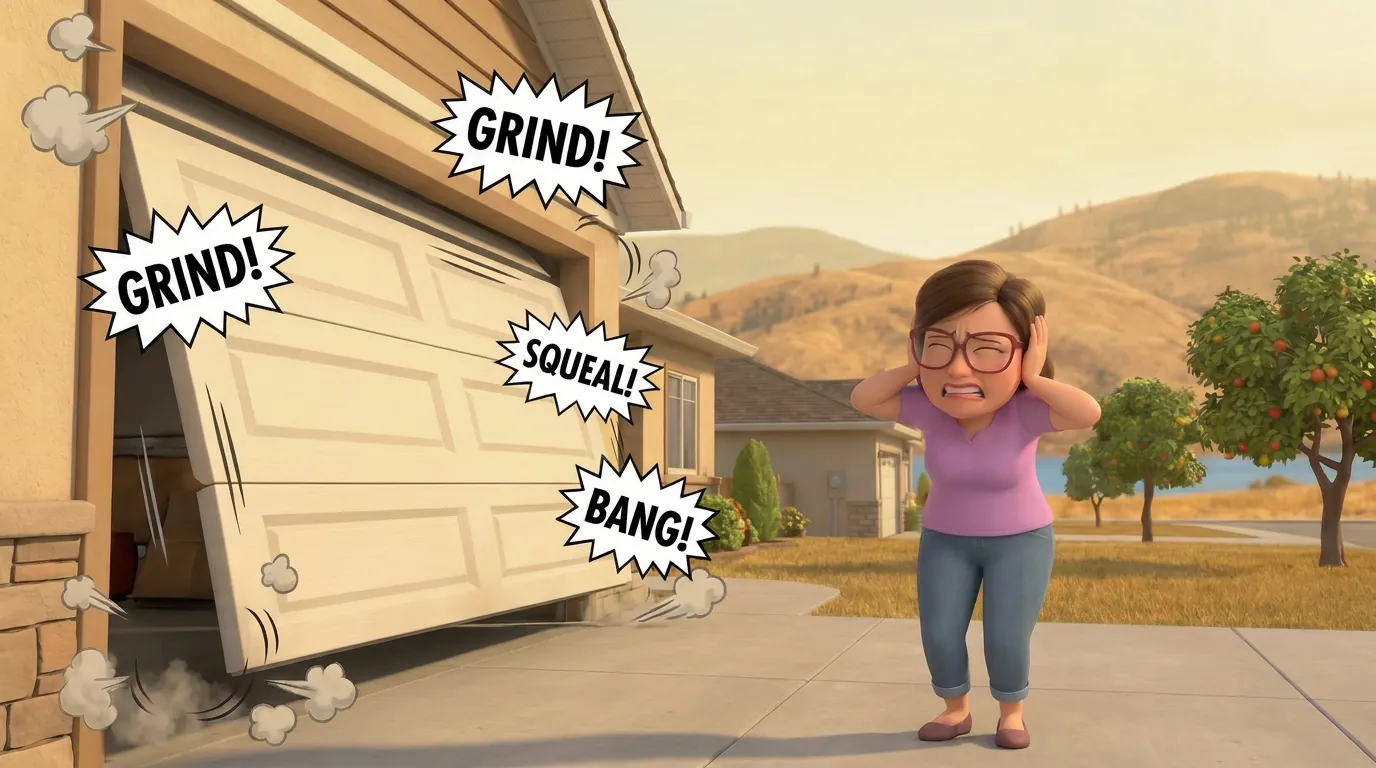
Stand in your Penticton garage for a week and your door will basically narrate its own health. A squeak you never noticed before, a grind that kicks in halfway up, a bang loud enough to send the dog under the bed, every one of those sounds is a clue. The trick is knowing which clues mean “spray some lubricant on me this weekend” and which mean “stop, do not touch, pick up the phone.” This guide walks through the noises a door makes, what is usually behind each one, and how our particular Okanagan climate plays a part.
Here is the quick read before we dig in: friction sounds like squeals and light rattles are almost always maintenance and rarely urgent, while a sudden sharp noise like a bang or snap usually signals a broken high-tension part and needs a professional right away. The volume and the suddenness are your best gauge of how worried to be.
Why Penticton’s climate writes the soundtrack
Before getting to specific noises, it is worth understanding why doors in the South Okanagan tend to be a little chattier than the manufacturer ever intended. Three local conditions do most of the damage.
First, the air here is dry. Low humidity is great for your patio season, but it means the factory grease and any lubricant you apply evaporates and stiffens faster than it would in a wetter climate. A door that was whisper-quiet in April can be squeaking by mid-July simply because the lube has dried out.
Second, there is dust and fine grit. Anyone who has wiped down a windowsill in Penticton in August knows how much fine, powdery dust moves through the valley. That grit settles into rollers, hinges, and bearings, mixes with what lubricant remains, and turns into a mild grinding paste that wears nylon rollers and metal bearings down faster than they should.
Third, the temperature swing is real. We get genuinely hot summer afternoons followed by cool nights, plus actual winter cold. Metal expands when it bakes and contracts when it cools, and a door that goes through that cycle every single day slowly works its own hardware loose and creaks as the panels shift. None of this is exotic, but it does mean a Penticton door asks for attention a bit more often than the average.
Squeals and grinds: dried-out, dust-worn moving parts
A high squeal or screech is the most common complaint we hear, and in this valley it is practically seasonal. The cause is almost always dry, dusty rollers, hinges, and bearings rubbing without enough lubricant between them. Because our air strips the grease and our dust loads the parts with grit, Penticton doors hit this stage sooner than doors in damper places. The good news is that a squeal is usually the easiest noise to cure. A proper garage-door silicone or lithium spray on the rollers, hinges, and spring coils typically quiets it within a day. Household oils like WD-40 are not the right tool here, as they attract more dust and wash out the real lubricant.
Grinding is the same family of problem one stage further along. Once a roller has lost its bearings or developed a flat spot, or once dust has chewed a nylon roller out of round, you stop hearing a clean squeal and start hearing a coarse grind as the part drags under the door’s full weight. Lubricant might mask it for an afternoon, but the worn part keeps deteriorating, and grinding usually means it is time for an inspection rather than another can of spray.
Catching these early genuinely saves money. A dry roller addressed at the squeal stage is a minor fix; the same roller left to grind can score the track and cascade into a much larger garage door repair. Keeping ahead of the dust and dryness is exactly what a routine tune-up and maintenance visit is built for, and in a climate like ours it pays for itself.
Bangs and snaps: the springs and cables you do not touch
These are the noises that should get you up off the couch. A single loud bang, the kind people describe as a firecracker or a rifle shot echoing in the garage, is most often a torsion spring breaking. That spring is wound tight to counterbalance the entire weight of the door, so when the steel fatigues and lets go, all of that stored energy releases in an instant with a violent crack. The tell-tale sign afterward is weight: the door suddenly feels impossibly heavy, the opener strains and stalls, or the door rises a few inches and stops.
A sharper snap or twang can be a lifting cable failing, which often happens right around a spring break because the cables suddenly carry a load they were never meant to bear alone. A let-go cable can drop one side of the door, sending it crooked and off its track. Both springs and cables are high-tension parts, and that tension is exactly why they are dangerous to handle and why no responsible guide will tell you to fix them yourself.
If you hear a bang or snap and the door is now heavy, leaning, or stuck, walk away from it. Do not keep mashing the opener button, which only risks burning out the motor or wrenching the door further off line, and never try to unwind or swap a spring on your own. This is the textbook stop-and-call situation, and it is one of the most frequent emergency visits we make.
Here is a quick sound-to-cause reference to keep in your back pocket:
- Squeal or screech rising up the door’s travel: dry, dusty rollers, hinges, or bearings needing lubricant. Low urgency.
- Coarse grinding under load: a worn roller, failing bearing, or door dragging in the track. Inspect soon.
- Rattle or buzz while running: loose bolts, brackets, or opener rail. Tighten the accessible hardware.
- Pop or creak at temperature changes: metal expanding and contracting between hot days and cold nights. Usually harmless.
- Sharp snap or twang: a lifting cable letting go. Stop and call.
- Single loud bang: a broken torsion spring. Stop and call.
Rattles, thermal pops, and the motor straining
Plenty of noises sit in the harmless middle. A rattle or buzz is usually the gentlest of all, and it almost always traces back to hardware that has vibrated loose over thousands of cycles, a process our daily heat-expansion swings only speed up. Walking the door and snugging the visible nuts, bolts, and brackets, while deliberately staying clear of the springs and cables, often silences a rattle completely. If tightening does not do it, the door may be out of balance or a roller may be on its way out.
The popping and creaking many Penticton homeowners notice, often at dusk or after a hot day, is usually just thermal movement. As the metal panels and steel tracks shed the day’s heat and contract, they shift and tick against one another. On its own this is normal and nothing to fear. It only deserves a closer look if the popping comes alongside the door moving unevenly or hesitating in its travel.
One more sound worth flagging is the opener itself. If the motor whines, hums, or grinds harder than it used to, the door may be getting heavy and harder to lift, often because the springs are tiring or a roller is binding. A straining opener is frequently a symptom rather than the disease, so before assuming the opener needs repair or replacing, it is worth having the door’s balance and hardware checked too.
Picture a typical Penticton scenario: a homeowner up on the bench by Skaha Lake notices their door has gone from a faint squeak in May to a steady grind by August, and the opener now groans on the way up. That progression, dry summer plus valley dust plus a roller worn out of round, is one we see constantly, and caught at the squeak it would have been a five-minute lubrication instead of a roller replacement.
The dividing line is simple enough to remember. Squeaks and light rattles you can usually manage yourself with lubricant and a wrench. A grind that will not quit, any bang or snap, or a door moving crooked are signals to bring in a pro before a worn part turns into a failed one. If your door has picked up a noise you would rather not guess about, for repair here in Penticton, call (778) 910-3106, or , and we will trace the sound back to its cause instead of just quieting the symptom.
Frequently Asked Questions
What does it mean when my garage door makes a single loud bang?
A sharp, isolated bang that sounds almost like a gunshot is most often a torsion spring breaking. The spring holds enormous tension, so it releases that energy instantly when it fails. After a bang like that the door usually feels far too heavy to lift and the opener struggles or stalls, which means you should stop using it and call a technician.
Why does my Penticton garage door squeal so much in summer?
Our dry summer air and the fine dust that blows around the Okanagan strip lubricant off the rollers and hinges quickly, and bare metal sliding on metal squeals. A fresh coat of garage-door-rated lubricant usually silences it within a day. If the squeal returns within weeks, the parts may be worn rather than just dry.
Is a grinding noise from my garage door serious?
Grinding is more serious than a squeal because it usually means a roller has worn out, lost its bearings, or the door is dragging in the track. It is metal chewing on metal under the full weight of the door, so it gets worse, not better. Lubricant may quiet it briefly, but the worn part still needs to be inspected and replaced.
Why does my garage door rattle when it runs?
Rattling almost always comes from hardware that has shaken loose over thousands of open-and-close cycles, made worse by our daily heat-expansion swings. Bolts, brackets, and the opener rail work themselves loose and buzz against the frame. Snugging up the accessible hardware with a wrench usually stops it, as long as you stay away from the springs and cables.
What causes the popping and creaking I hear at night?
Sharp summer days and cool Okanagan nights make the door's metal expand and contract, and the panels and tracks pop or creak as they shift against each other. This thermal ticking is usually harmless and not the same as a structural snap. If the popping comes with the door moving unevenly, though, have it checked.
Which garage door sounds mean I should stop and call a pro?
Stop using the door if you hear a loud bang, a sudden snap, or grinding paired with the door moving crooked or off level. Those point to a broken spring, a failing cable, or a roller giving out, all of which involve high tension or can drop the door. Squeaks and light rattles are not emergencies, but a sudden sharp noise is.