Summer Sun Making Your Osoyoos Garage Door Reverse Before It Closes?
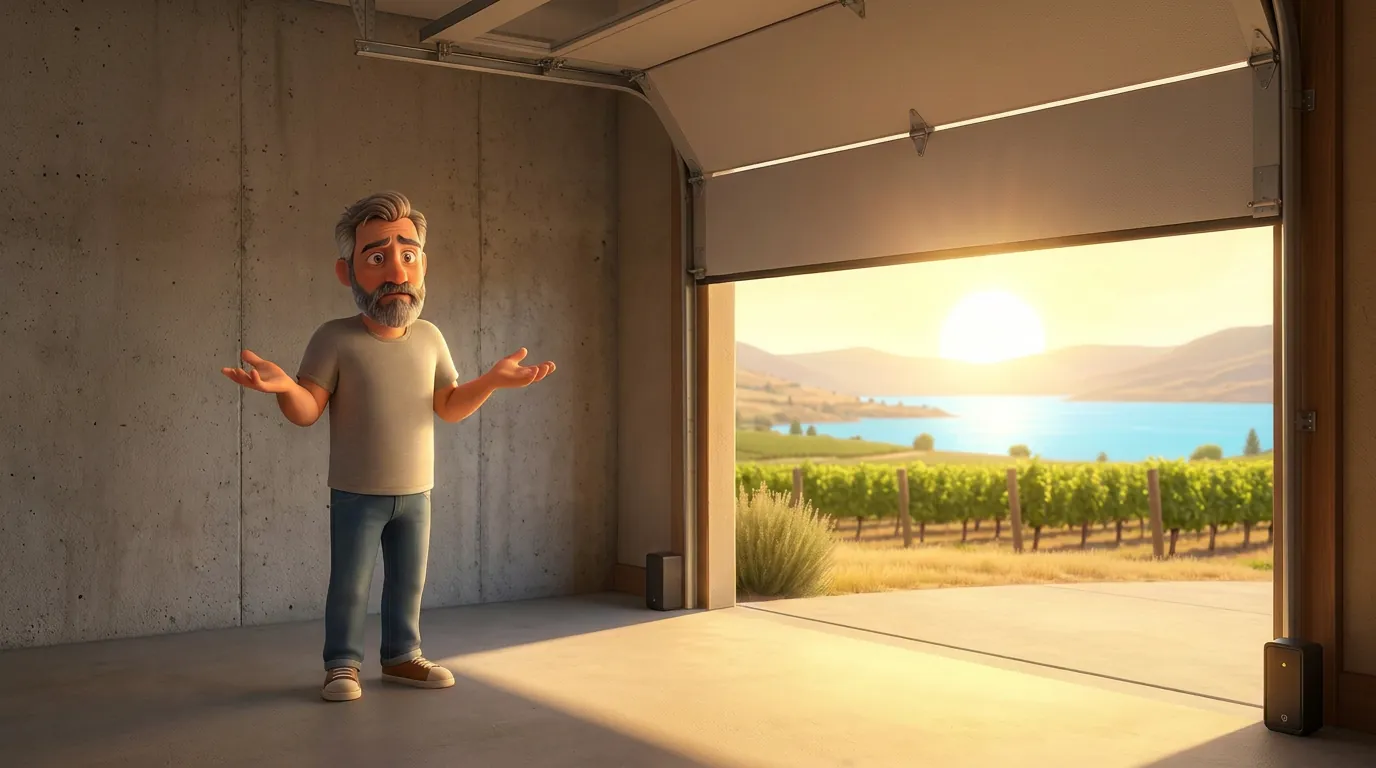
Osoyoos gets some of the most intense sun in the country, and it shows up in a particular kind of garage door problem that arrives the moment summer does and vanishes the rest of the year. You press the button, the door starts down, and just before it seals it changes its mind and rolls back up, but only in the early morning or late afternoon. The culprit is not a broken opener. It is the low summer sun playing tricks on your door’s safety sensors, and it is one of the most common warm-season calls we get. Here is what is happening and how to fix it.
The short answer: when the sun sits low and shines straight into one of the photo-eye safety sensors near the floor, it washes out the infrared beam, and the opener assumes the doorway is blocked and reverses for safety. The fix is to shade or reposition the affected sensor. Let us walk through how the system works and how to solve it.
How the safety reversal system works
Every garage door opener built since the early 1990s has a photo-eye safety system, required by law after too many accidents with closing doors. Two sensors sit about six inches off the ground, one on each side of the door. One sends an invisible infrared beam across the opening, and the other receives it. As long as that beam is unbroken, the door is allowed to close.
The moment something breaks the beam, a pet, a child, a bag of groceries, the opener reverses the door immediately. That is the system doing exactly its job. The catch is that the sensors cannot tell the difference between a real obstruction and a beam that simply is not getting through because something is overwhelming the receiver, which is exactly what intense, direct sunlight does.
That is why a summer reversing problem traces to the sensors rather than the motor. The opener is working perfectly; it is being told, falsely, that the doorway is blocked. Understanding that one fact turns a mysterious seasonal fault into a quick, logical fix, and it is the first thing a technician checks on any garage door repair call for a door that will not close.
Why direct sun causes false reversals
The photo-eye receiver is looking for a specific infrared signal from its partner across the doorway. When the low Osoyoos sun shines straight into that receiver’s lens, it floods the sensor with light, including infrared, and drowns out the beam it is supposed to be reading. The result is the same as if something had physically broken the beam: the opener sees no clear signal and reverses the door.
The giveaway is timing and direction. This happens when the sun is low and aimed into the garage, which means the morning or the late afternoon depending on which way your garage faces, and it behaves the rest of the day once the sun climbs or moves off. If your door only refuses to close at a certain hour, with a clean, empty doorway, you can be fairly confident the sun is the cause rather than a hardware fault.
The fix is refreshingly simple. Shade the affected sensor so the sun cannot hit the lens directly. A small sun shield, a short piece of tubing slipped over the sensor, or repositioning it slightly will usually do it. While you are there, clean both lenses with a soft cloth and confirm the sensors are aligned, since a clean, shaded, properly aimed sensor is what reliably reads the beam.
Sensor fixes you can do
Before anything else, look at the sensors and work through these steps. Most have a small indicator light that tells you whether the beam is connecting.
- Clean both lenses with a soft, dry cloth to clear dust, our climate’s constant, and any film.
- Check for anything low in the doorway breaking the beam, like a bin or a coiled hose.
- Shade the sun-facing sensor with a small shield or a short length of tubing.
- Loosen each bracket and adjust the angle until both alignment LEDs glow steady, then retighten.
- Test the door at the time of day it normally fails, to confirm the shade fixed it.
If the LEDs will not go steady no matter how you aim them, gently check that a sensor has not been bumped out of position, since a knock from a car or a ladder is a frequent cause. Keeping the lenses clean is an ongoing job in a dry, dusty climate, so it is worth adding to your regular garage door maintenance routine.
When it is not the sun
Sometimes the sensors are clean, shaded, and aligned and the door still reverses. At that point the cause is elsewhere. Worn or pinched sensor wiring can interrupt the beam intermittently, producing a fault that comes and goes regardless of the sun. The door’s own settings matter too: if the close-force or travel limits are set wrong, the opener can sense resistance partway down, such as a roller dragging in a gritty or rough track, and read it as an obstruction.
A door that is also noisy, slow, or uneven is telling you the issue runs deeper than the sensors, and ignoring it is how a small fault grows. In our dry climate, a roller binding on grit is a common non-sun cause of a door that hesitates or reverses, which ties back to keeping the tracks clean and the rollers lubricated.
Picture an Osoyoos homeowner whose door reverses every clear morning in July. They shade the east-facing sensor with a small cover, clean both lenses, and the problem disappears entirely, no parts and no service call. But if shading and cleaning had not worked, and the door still balked with steady lights and an empty doorway, the next step would be a proper look at the wiring and settings, since the sensors are part of the opener system a technician can recalibrate. If you have shaded and cleaned the sensors and your door still will not close, for garage door repair in Osoyoos, call (778) 910-3106, or , and we will find the real cause without disabling the system that keeps the door safe.
Frequently Asked Questions
Why does my garage door reverse only at certain times of day?
That timing points to the sun. When the sun is low, in the early morning or late afternoon, it can shine directly into one of the photo-eye safety sensors near the floor and wash out the infrared beam. The opener reads that as a blocked doorway and reverses. If it only happens when the sun is at a certain angle, sunlight is almost certainly the cause.
How do I stop the sun from making my garage door reverse?
Shade the affected sensor. A small sun shield, a short length of tubing over the sensor, or repositioning it slightly so the sun no longer hits the lens head-on usually solves it. Clean the lenses and confirm both sensors are aligned at the same time, since a clean, shaded, aligned sensor is what you are after.
How do I realign my garage door safety sensors?
Loosen the wing nut on each sensor bracket, then adjust the angle so both sensors point directly at each other. Most have a small LED that glows steady when aligned and blinks when not. Tighten the brackets once both LEDs are solid, then test the door. Cleaning the lenses first is always worth doing.
Why does my garage door close if I hold the wall button?
Holding the wall button overrides the safety sensors and forces the door down, which confirms the problem is the sensors rather than the motor or door. It is fine as a one-time way to get the door closed, but never leave a door that only closes this way, since the safety reversal is disabled while you hold the button.
Is it safe to bypass my garage door sensors?
No, not as a permanent fix. The sensors stop the door from closing on a child, pet, or vehicle. Bypassing them removes that protection and is unsafe and, in many places, against code. If the sensors keep failing for a reason other than the sun, replace them rather than disable them.
When should I call a professional about a reversing garage door?
If shading and cleaning the sensors does not fix it, or the door reverses with an empty, shaded doorway and steady sensor lights, the cause may be wiring, the logic board, or the door's travel and force settings. Those are worth a professional diagnosis rather than guesswork, especially if the door is also noisy or rough.