Garage Door Sticking in the Summer Heat? Why It Happens in Penticton
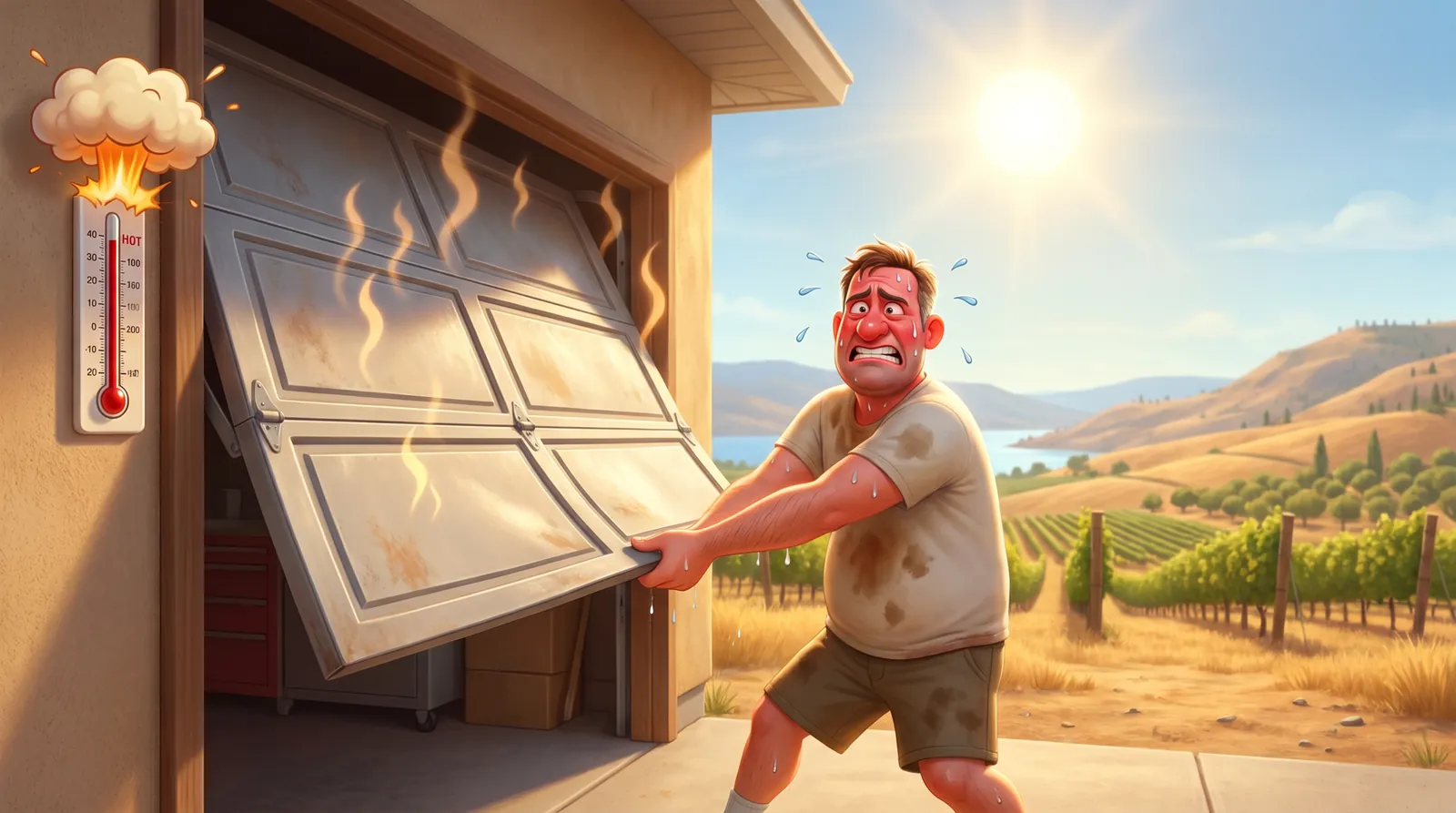
The first real heat wave of a Penticton summer has a way of surprising homeowners. A garage door that opened smoothly all spring suddenly catches, drags, or refuses to glide the way it used to, right when the temperature climbs into the high 30s. It is one of the most common warm-weather calls we get, and the cause is usually the heat itself working on a door that was already running close to the edge. Here is what is happening and what to do about it.
The short answer: summer heat makes metal expand, and a door with dry rollers or slightly worn hardware has just enough less room to move that it starts to bind. Most of the time the fix is cleaning and lubricating the moving parts, not a major repair. But a door that sticks hard, or sticks even after you have lubricated it, is telling you something else needs attention. Let us break it down.
How summer heat makes a door stick
Metal expands as it heats up, and a garage door is a big assembly of metal parts that all grow a little in the summer sun. The panels, the tracks, the rollers, and the hardware each expand by a small amount, and on a door with tight tolerances or a bit of existing wear, that small change is enough to turn smooth movement into binding. A door running in 35 to 40 degree heat is simply working with less clearance than the same door at 15 degrees.
Sun exposure makes it sharper. A door that faces the afternoon sun in Penticton, especially a dark or uninsulated one, can get far hotter than the air temperature, which exaggerates the expansion across that panel. That is why a door might run fine in the cool of the morning and start sticking by mid-afternoon when the heat peaks. The timing of the sticking is often the clue that heat is the driver.
There is a knock-on effect worth knowing. When the door binds, the opener has to work harder to push or pull it through the tight spot, and on the hottest afternoons it can strain, slow down, or even reverse, reading the resistance as an obstruction. So a door that sticks in the heat is not just an annoyance; it is quietly overworking the opener too, which is one more reason to deal with the binding rather than muscle through it day after day.
None of this means the door is broken. It means the door is operating at the limit of its tolerances, and the heat has pushed it over. The job is to give those moving parts back the clearance and smoothness they need, which is exactly what routine garage door maintenance is for. In a hot, dry climate like Penticton’s, that maintenance matters more than the once-a-year advice written for milder places.
What you can check, and what needs a pro
A good portion of summer sticking is well within homeowner territory. Start with the tracks and rollers. Wipe the tracks clean of dust, then apply a proper garage-door silicone spray or white lithium grease to the rollers, hinges, springs, and bearings. Cycle the door a few times and see if the binding clears. A surprising amount of heat-season sticking comes down to dry hardware and resolves right here.
Here is the safe split for a sticking door:
- Safe to do: wipe the tracks clean, lubricate the rollers, hinges, springs, and bearings, and check for worn or wobbly rollers.
- Leave to a pro: anything involving the springs or cables under tension, or realigning a bent or shifted track.
- Never do: force a door that is catching, since that bends tracks and pops rollers.
If cleaning and lubricating do not fix it, look a little closer, but stay out of the high-tension parts. Check whether a roller looks worn, whether a track has shifted, or whether the door binds at the same spot every time, which points to alignment. The firm rule throughout is to never force a door that is sticking, because forcing a binding door is the moment a small fix becomes a garage door repair.
When sticking signals a bigger problem
Most summer sticking is minor, but some of it is a warning. If the door binds hard, sticks unevenly so one side lags the other, or grinds loudly despite a thorough cleaning and lubrication, the cause has moved beyond simple heat expansion. Worn rollers, a bent or misaligned track, loose hardware, or drifting balance can all make a door stick, and the heat just brings the underlying issue to the surface.
A door that catches at the same point every cycle is the classic sign of a track or roller problem rather than general expansion. So is a door that has started feeling heavier or running unevenly, which points toward the rollers or the spring balance. None of these are fixed by more lubricant, and left alone, a seized roller dragging in the track can pull the door off its track entirely, turning a minor annoyance into a real repair.
Consider a typical Penticton scenario. A homeowner with an eight-year-old door that has skipped a couple of tune-ups notices it catching every hot afternoon. They clean and lubricate it and it improves, but it still binds near the top of travel. That repeated, same-spot sticking points to a track or roller issue, not just heat, and it is the kind of thing worth having checked before it worsens or strands a car in the garage.
If your door is sticking and the basics have not solved it, we can find the real cause quickly and get it running smoothly before the next heat wave. for garage door repair in Penticton, call (778) 910-3106, or , and we will sort out the binding so your door glides as easily in July as it does in April.
Frequently Asked Questions
Why does my garage door only stick in the summer?
Heat is the usual reason. As Penticton temperatures climb into the 30s and 40s, the metal panels, tracks, and hardware expand slightly, and that can be enough to make a door bind that ran fine in cooler weather. Dried-out lubricant makes it worse, so summer is when a marginal door finally sticks.
Can heat actually warp a garage door?
Prolonged, intense heat and direct sun can cause some warping or panel distortion, especially on thin, dark, uninsulated doors that absorb a lot of heat. More often, summer sticking is from thermal expansion and dry hardware rather than permanent warping. An insulated, lighter-coloured door resists heat distortion far better.
Is it safe to force a garage door that is sticking?
No. Forcing a binding door can bend a track, pop a roller out, strain the opener, or stress a cable or spring. If the door catches or labours partway, stop and find the cause. A door that needs to be forced is telling you something is wrong, and pushing through it usually turns a small issue into a bigger repair.
Will lubricating my garage door fix summer sticking?
Often, yes, if the cause is dry rollers, hinges, or bearings. A proper garage-door silicone or lithium lubricant on the moving parts, plus clean tracks, resolves a lot of heat-season sticking. If the door still binds after cleaning and lubricating, the problem is likely alignment, worn rollers, or hardware, which needs a closer look.
Does a hot, sun-facing door stick more?
Yes. A door that takes the direct Penticton afternoon sun, especially a dark or uninsulated one, can run far hotter than the air temperature, which exaggerates the expansion. That is why a door may glide in the cool morning and start catching by mid-afternoon when the heat peaks. The timing is often the clue.
When should I call a professional about a sticking garage door?
Call when cleaning and lubricating do not fix it, when the door binds hard or unevenly, or when you hear grinding or see a roller or track out of line. Those point to alignment, worn rollers, or hardware issues that are best corrected by a technician before they pull the door off track or damage the opener.