Garage and Shop Doors for Okanagan Acreage and Vineyard Properties
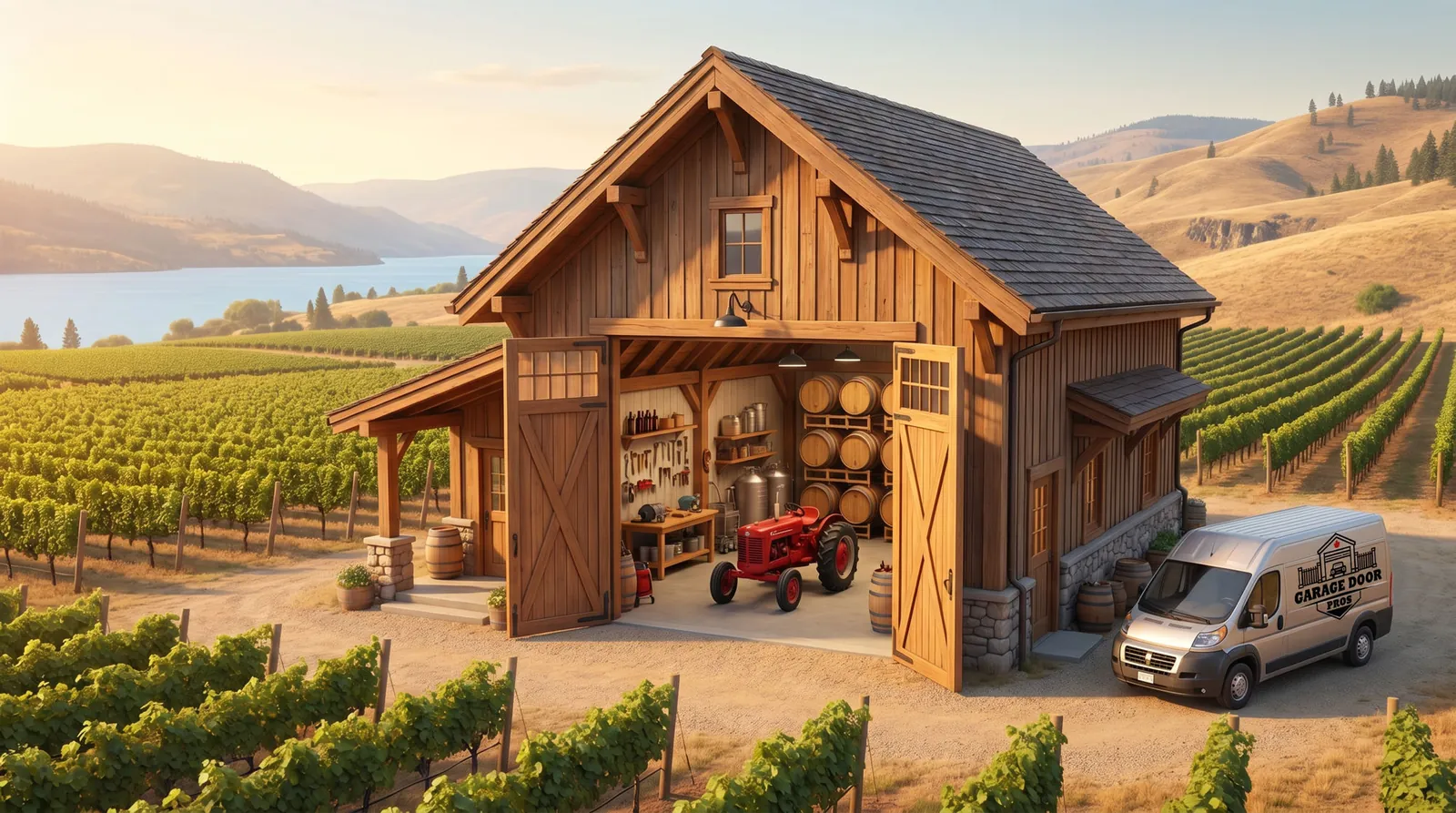
A property in the Okanagan’s acreage and vineyard country has different garage door needs than a house in town. Out here, the doors have to swallow tractors, trailers, quads, and the gear that keeps an orchard or a vineyard running, often through big openings and long days. They face the same intense summer sun and cold winters as any door, plus the wear of regular, heavy use. Choosing the right shop and garage doors for a rural property is its own decision, and here is how to get it right.
The short answer: size the door to your largest equipment, insulate it if you heat or work in the space, match the operator to the door’s weight and how often it cycles, and build in durability and security for an outbuilding that may sit away from the house. Let us go through what rural properties actually need.
What rural and vineyard properties need from a door
The first thing that sets rural doors apart is size. A standard residential door is about seven feet tall and eight to nine feet wide, which is fine for a car but tight or impossible for a tractor with a raised loader, a fifth-wheel trailer, or a sprayer. Shop and equipment doors are often considerably larger, and getting a big piece of equipment in and out comfortably, day after day, is the whole point.
The second is use. A door on a working vineyard or orchard shop gets cycled far more than a home garage, and it takes the occasional bump and the grit of farm work. That demands sturdier construction and hardware than a typical residential door, plus an operator built for the load and the frequency. A door that is undersized for the duty wears out fast and becomes a daily frustration.
The third is the environment. Rural Okanagan buildings take the full intensity of the summer sun and the cold of winter, often with less shelter than a house in town. That makes material choice and, where it matters, insulation important, and it is exactly the kind of project where a professional garage door installation assessment pays off, because the opening, the structure, and the use all have to be matched to the door.
Sizing for equipment, tractors, and bays
Getting the size right starts with measuring your largest equipment at its widest and tallest, including the cab, any raised attachments, and exhaust stacks, then adding clearance. From there, the door opening, the door height when open, and the ceiling all have to accommodate it. This table gives a rough sense of the options.
| Door type | Typical size | Best for |
|---|---|---|
| Standard residential | ~7 ft tall, 8-9 ft wide | Cars, light vehicles |
| Wide / tall residential | up to ~10 ft | Trucks, small trailers, quads |
| Shop / equipment door | 10-14 ft+ | Tractors, RVs, larger trailers |
| Commercial / oversized | Custom | High-clearance equipment, frequent use |
A few rules of thumb follow:
- Measure the biggest thing you will drive through, then add room to maneuver.
- Plan the ceiling height alongside the door, since the open door needs headroom too.
- For very tall doors, expect a high-lift or vertical-lift track and a matched spring system.
- Build in extra width for backing trailers and equipment in without stress.
Insulation, durability, and security for outbuildings
Beyond size, three things shape a good rural door. Insulation comes first if you heat the shop, work in it through the seasons, or store anything temperature-sensitive. An insulated door keeps a Vernon shop far more comfortable and stable through hot summers and cold winters and cuts heating costs, which is why proper insulation is worth it on a working building even if it would be skipped on a bare equipment barn.
Durability is the second. A working shop door takes bumps, grit, and frequent cycling, so heavier-gauge steel and sound hardware earn their keep. Insulated steel is usually the best all-round choice for our climate, balancing durability, low maintenance, and resistance to heat, sun, and cold, with heavier construction for the busiest doors.
Security is the third, and it is easy to underrate on a property where the shop sits away from the house. A remote outbuilding full of equipment and tools is a softer target than the home, so solid door construction, quality locks, good lighting, and a modern operator with rolling-code security all matter. For valuable gear, tying the building into a camera or alarm system is worth considering.
Openers and operators for big or frequent-use doors
A large, heavy, or frequently used door needs more than a standard home opener. Big doors often use a wall-mounted jackshaft operator that mounts beside the door and keeps the ceiling clear for tall door travel, or a commercial-grade operator built for the weight and the cycle count. Whatever the type, the operator has to be sized to the actual door, because an undersized unit on a heavy door works at its limit and fails early.
Reinforcement is part of the package too. Wider and taller doors carry more wind load and weight, so they need appropriate bracing, the right springs, and sound hardware to run smoothly and last. Automating a big door is not a simple residential-opener swap; it is a matched system of door, springs, reinforcement, and operator.
Picture a Vernon vineyard with an old, undersized shop door that the tractor barely clears and that has to be muscled open by hand. A properly sized insulated shop door with a commercial operator lets equipment roll in and out easily all season, keeps the shop comfortable for work, and secures the gear inside, and it stands up to years of daily use. If you have an acreage or vineyard property and need doors built for the job, for garage door installation in Vernon, call (778) 910-3106, or , and we will spec the right doors and operators for your property.
Frequently Asked Questions
What size garage door do I need for a tractor or farm equipment?
It depends on the equipment, but rural shop doors are often 10 to 14 feet wide and tall to clear tractors, trailers, and implements with their attachments raised. Measure your largest piece of equipment at its widest and tallest, including cab and exhaust stacks, then add clearance. The opening, the door, and the ceiling height all have to be planned to that size.
Should I insulate a shop or outbuilding door?
If you heat the shop, work in it through the seasons, or store anything temperature-sensitive, yes. An insulated door keeps the space far more comfortable and stable through Okanagan summers and winters and cuts heating costs. For an unheated equipment barn you only park in, insulation matters less, though it still adds rigidity and quiet.
What is the difference between a residential and a commercial garage door operator?
Commercial or heavy-duty operators are built for larger, heavier doors and more frequent cycles than a typical home opener. On a busy shop or a big door, a commercial-grade operator lasts longer and handles the load better. A standard residential opener can be undersized for a large rural door, so matching the operator to the door and use is important.
How do I secure an outbuilding or shop full of equipment?
Solid door construction, quality locks, a modern operator with rolling-code security, and good lighting all help. For valuable equipment and tools, consider a sturdier door, additional locking, and tying the building into a camera or alarm system. A remote outbuilding is a softer target than the house, so the door and locks deserve real attention.
Can a big shop door be automated?
Yes. Large doors can be automated with an appropriately sized operator, often a wall-mounted jackshaft or a commercial unit, plus the right springs and reinforcement. Automating a heavy door is not a simple residential-opener job, so it should be sized and installed to handle the weight and the frequency of use.
What door material holds up best on a rural Okanagan property?
Insulated steel is usually the best all-round choice for durability, low maintenance, and resistance to our heat, sun, and cold. For a working shop, heavier-gauge steel stands up to the bumps and demands of equipment use. Wood looks great on a feature building but needs the most upkeep in our dry, sunny climate.