Steel vs. Aluminum vs. Wood: Which Garage Door Suits the Okanagan?
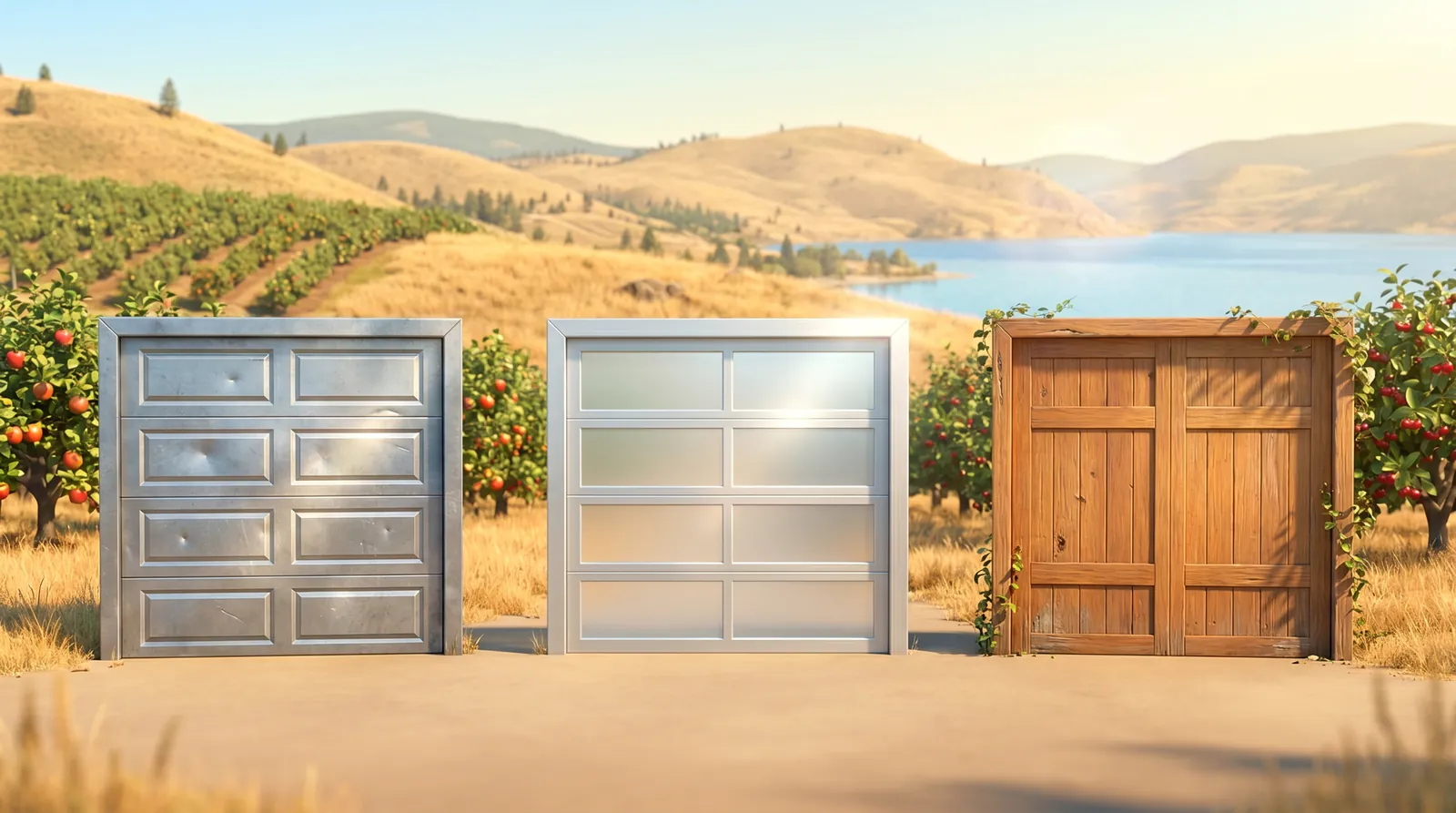
A garage door in Vernon has one of the harder jobs around. It bakes under intense summer sun and high-30s heat in July, then sits through frost, snow, and cold in January, and it has to keep working smoothly through both. That big annual temperature swing, plus the strong Okanagan sun, is tough on materials, which is why the material you choose matters more here than it would in a mild coastal town. Here is how the main options hold up, and which one is the safe bet for the Okanagan.
The short answer: for most homes, an insulated steel door is the best all-round choice, because it handles both heat and cold, resists warping, and stays rigid through the expansion and contraction our climate puts it through. Aluminum is the rust-proof, low-maintenance alternative with some trade-offs, and wood is the beauty option that asks for real upkeep. Let us look at each.
What Okanagan heat, sun, and cold do to a door
Materials expand when they heat up and contract when they cool, and the bigger the temperature range, the more they move. In the Okanagan, a door can swing from well above 35 degrees on a sunny summer afternoon to well below freezing on a winter night, and it cycles through smaller versions of that swing every single day. Every one of those cycles flexes the panels, the seals, and the hardware a little.
The sun adds its own stress. The Okanagan gets intense, high-elevation sun, and a door in full afternoon sun runs far hotter than the air, which both exaggerates the expansion and breaks down finishes over time. Over years, that combination of movement and UV is what separates a door that ages gracefully from one that loosens, distorts, or fades early. A door built to absorb the movement and shrug off the sun simply rides it out.
This is why the conversation about material is really about durability in a demanding climate, not just looks. The right garage door installation for the Okanagan is one specced to handle both ends of our temperature range and the strong sun, because a door built for only one season will struggle through the other.
Steel, aluminum, and wood compared
Each material trades off differently against our heat, sun, and cold. This table sums up how they compare for a Vernon home.
| Material | Heat / sun | Cold | Upkeep | Cost | Best for |
|---|---|---|---|---|---|
| Insulated steel | Strong (esp. light colours) | Strong | Low | Mid | Most homes; best value |
| Aluminum | Rust-proof, but conducts heat | Weak if uninsulated | Very low | Higher | Modern look, low maintenance |
| Wood | Dries and checks in sun | Freeze stress | High | Highest | Curb appeal, with upkeep |
A few rules of thumb fall out of that:
- Want the best balance of heat, cold, and low upkeep: choose insulated steel.
- Want a rust-proof, modern, or full-view glass door: choose aluminum.
- Want a showpiece and will keep up the refinishing: choose wood.
- Love the wood look but not the work: choose a faux-wood steel door.
Steel is the workhorse, and insulated steel especially so, holding its shape through both heat and cold while resisting the warping intense sun can cause in thinner doors. Aluminum brings rust immunity and a light, modern look but dents more easily and, uninsulated, does little against heat or cold. Wood is the most beautiful and the most demanding, needing regular sealing and refinishing to survive our dry heat and sun.
Colour and finish are worth a thought in our sun, whatever the material you choose. Mid-tone and lighter colours absorb less heat and fade less visibly under the intense Okanagan UV, while very dark doors run hotter, which adds to summer expansion, and can show fade sooner. Just as important, a quality factory-baked finish holds its colour far longer than a cheap one, so on a sun-facing Vernon door the finish matters as much as the material underneath it. Pairing a durable material with a forgiving colour and a good finish is what keeps the door looking sharp for years rather than tired in five.
Why insulation matters here
It is tempting to think of insulation as a winter-only feature, but in the Okanagan it works just as hard in summer. Insulation slows heat transfer in both directions, so an insulated door keeps July heat out of an attached garage and January cold out in winter. For a garage attached to the house or with a room above, that year-round buffer is a real comfort and energy benefit, not just a cold-weather one.
There is a structural payoff too. An insulated door is built as a steel-foam-steel sandwich, which is far more rigid than a single skin of metal. That rigidity is exactly what helps the door resist the warping and flexing that big temperature swings and strong sun cause, and it makes the door quieter and more dent-resistant into the bargain. The same feature that keeps the garage comfortable also helps the door survive our climate, which is why proper garage door insulation earns its keep year-round here, not just in the cold months.
Picture a Vernon homeowner choosing between a budget single-skin steel door and a mid-range insulated one for an attached garage. The insulated door costs a few hundred dollars more, but it holds its shape through the summer sun, keeps the garage and the room above it more comfortable year-round, and runs quieter. Over a 20-plus-year life here, that is the easy call, and the small upgrade pays for itself in comfort, quiet, and a door that still looks and works like new after a decade of Okanagan summers and winters. If you are choosing a new door, for garage door installation in Vernon, call (778) 910-3106, or , and we will help you pick a material built for both ends of our climate.
Frequently Asked Questions
What is the best garage door material for the Okanagan climate?
For most homes, an insulated steel door is the best all-round choice. It handles the Okanagan's hot, sunny summers and cold winters well, resists warping, and the insulation adds rigidity for the temperature swings. Aluminum is light and rust-proof with some trade-offs, and wood looks beautiful but needs the most upkeep in our dry heat and strong sun.
Does the Okanagan sun warp a steel garage door?
Quality insulated steel resists heat distortion well, especially in lighter colours that absorb less heat. Thin, single-skin, dark steel doors are the ones most prone to looking wavy under intense sun. An insulated steel door is far more rigid and holds its shape through a hot Vernon summer and a cold winter alike.
Is a wood garage door a good idea in the Okanagan?
Wood can look stunning, but our climate is demanding for it. Hot, dry summers and strong sun dry and check the wood, and winter cold adds stress, so a wood door needs regular sealing and refinishing to stay sound. If you love the look but not the upkeep, a faux-wood steel door gives you the appearance with far less maintenance.
Does insulation help a garage door in the Okanagan summer?
Yes. Insulation slows heat transfer in both directions, so it keeps summer heat out of an attached garage as well as winter cold in. The insulated, steel-foam-steel construction is also more rigid and dent-resistant and cuts noise. In a hot-summer, cold-winter valley like the Okanagan, insulation earns its keep year-round, not just in winter.
What is the cheapest durable garage door for the Okanagan?
An insulated steel door is usually the best value over its life. A bare single-skin door costs less upfront but performs worse in heat and cold and dents more easily. Insulated steel costs a bit more to start but lasts longer, holds its shape through the temperature swings, and needs little upkeep, making it cheaper to own over time.
Which garage door colour is best for the intense Okanagan sun?
Mid-tone and lighter colours absorb less heat and tend to fade less visibly than very dark shades under the strong Okanagan sun. A dark door looks sharp but runs hotter, which adds to summer expansion and can speed up finish fade. A quality factory finish in a mid-tone is the most forgiving choice here.